


A kidney transplant can be life-changing for people with kidney failure. As it helps restore kidney function, it contributes to a more active and independent daily life. After the transplant, patients are required to take long-term medication to protect protecting the organ and keeping it working well over time. Researchers are now investigating the factors that cause patients to respond differently after a transplant. In particular, they are looking at differences among individuals, including biological sex, hormone-related factors, and how the body adjusts on the genetic level over time.
Thanks to the contributing experts from our partners for their input on this article: Dr. Antje M. Richter (JLU), Veit Baumann (JLU), Fareeha Afzal (HPI), and Dr. Matthieu-P. Schapranow (HPI).
Why your genes matter after kidney transplant
After receiving a new kidney, the new organ and the body need some time to adapt. For example, the immune system, which normally protects the body from infections and other harmful invaders, needs to learn to accept the new organ. Immunosuppressive medication helps keeping the immune system in balance so that it does not damage the donor kidney in case it was recognized as foreign tissue. However, the body does not respond in exactly the same way for everyone. Factors such as biological sex, age, and hormone levels can influence how someone responds after a transplant. To better understand these differences, look more closely at what is happening inside our cells.
Inside almost every cell of the human body is DNA, which can be thought of as a complete instruction cookbook for the body, containing all details for growth, repair, and everyday functions. Although every cell carries the same DNA, not all of it is used in the same way. For example, a kidney cell activates only the instructions needed for its specific function while ignoring others. These instructions are organized into ‘genes’, which you can think of as individual recipes in a large cookbook. Cells select which recipes to use based on the body’s needs, much like choosing meals from a cafeteria. This selective gene activity is essential for proper body function and can also be influenced by biological sex and hormones, which act as internal signals that help regulate how strongly certain genes are activated, especially in situations such as recovery after transplantation
While controlling the gene activity, the body does not simply turn genes fully on or off. Instead, it carefully adjusts their level of activity, for example, through so-called transcription factors. A helpful way to imagine this is as a light dimmer. Instead of switching the light either completely on or off, gene activity can be increased or decreased depending on the situation and environmental factors. This fine control allows the body to respond to changes, such as healing after a transplant or adapting to new medication. This kind of gene regulation is also specific per person. For example, different hormones in man and woman or age can influence gene regulation leading to subtle differences in how the body reacts over time.
DNA methylation affects gene activity
Another way the body adjusts gene activity is through the so-called process of DNA methylation. It involves small epigenetic chemical changes to DNA that can slightly increase or decrease the activity of specific genes. These changes do not alter the DNA sequence itself. Instead, they influence how strongly certain instructions can be used by the cell. Over time, this can affect how cells grow, repair themselves, or respond to their environment.
Researchers are interested in investigating how these processes differ between individuals, including between men and women, because hormone levels and immune responses can also influence epigenetic regulation. Since these changes are subtle and develop over time, researchers use genetic and epigenetic methods to study them in detail. This helps them to better understand how cells adapt after transplantation and how these adaptations may influence the long-term function of the donor organ.
Why your respond might differ
Every person has a unique biological makeup. As a result, the way gene activity is adjusted can differ from one individual to another. Biological sex is one of the factors that can influence this process. Men and women can differ in hormone levels, immune responses, and how the body processes medication. These differences may also affect how gene activity is regulated over time and how the body adapts after transplantation.
Researchers are currently exploring ways to integrate new findings about epigenetic processes, in particular DNA methylation, to better understand each patient’s situation after a transplant. By examining individual factors such as biological sex, hormone levels, and gene regulation, researchers aim to identify how these factors influence immune responses.
GeGe4Nephro: Research for better gender-specific health of kidney transplant patients
The GeGe4Nephro research consortium is developing an AI‑based prediction model that helps physicians better assess an individual’s risk of complications after a kidney transplant, such as the risk of developing cancer. This allows preventive measures—like targeted skin‑cancer screenings—to be used in a more personalized and responsible way. To achieve this, the project is creating an interactive tool that presents personal risk profiles in real time for each patient. The tool is being tested in clinical practice and is planned to become an integral part of routine medical care in the future.
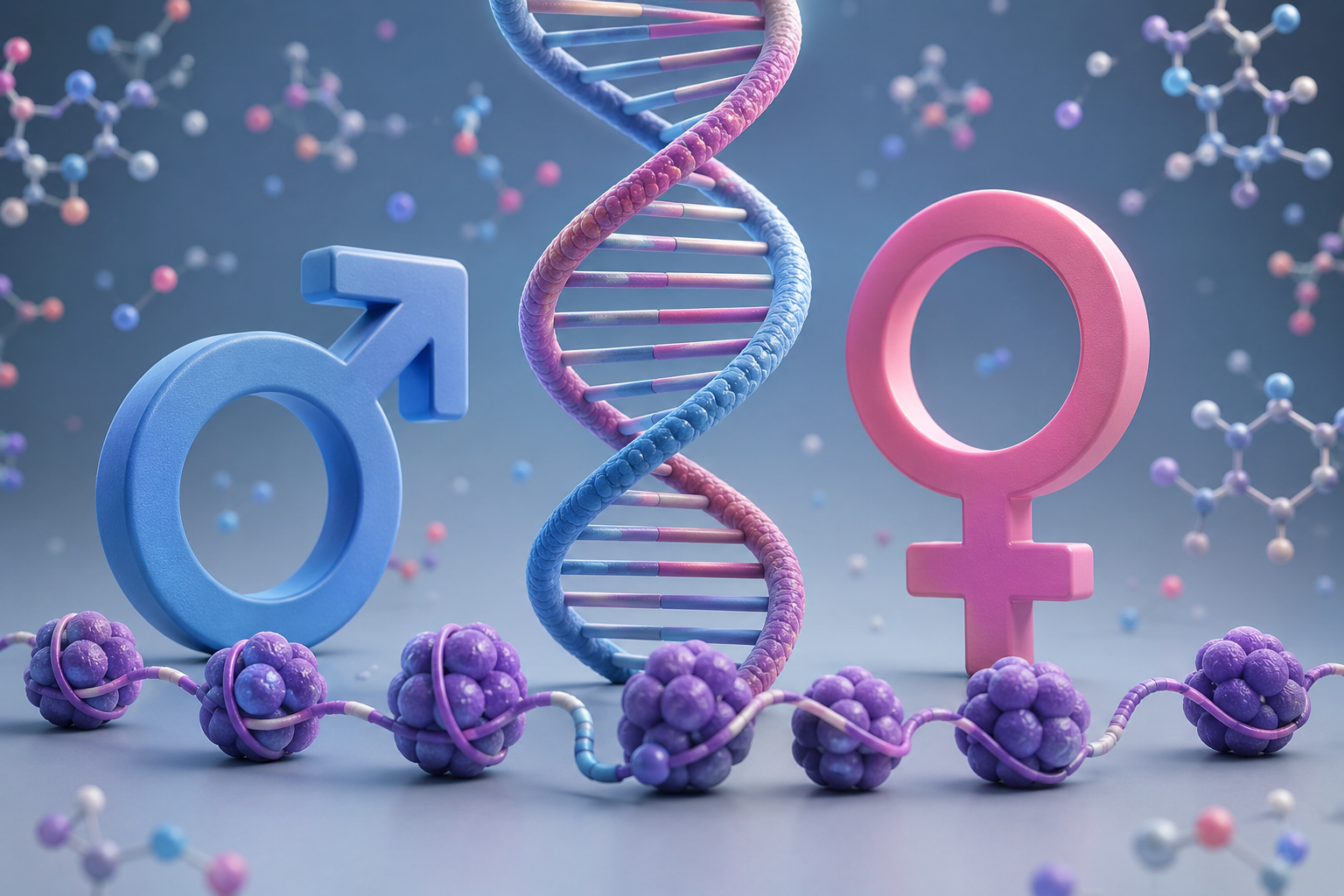
Image generated with ChatGPT prompt: 3D image of a DNA strand between a blue male symbol and a pink female symbol. Includes purple histones at the bottom. Floating molecules in the background. Soft studio lighting, scientific CGI, clean and modern.


Comments are closed